For many men with autism, relationships are one of the most rewarding — and one of the most exhausting — parts of life. The desire for deep, meaningful connection is very much present. But so is a persistent undercurrent of anxiety: about saying the wrong thing, misreading a signal, coming on too strong, or not being “enough” in ways that are difficult to define.
If this resonates, it’s worth knowing that what you’re experiencing has a name, a context, and — importantly — a path forward. Individual relationship counseling for autistic men in Denver, CO, can offer a uniquely supportive space. This space is designed to build confidence, understand their relational patterns, and move toward the connections they genuinely want.
Why Does Relationship Anxiety Look Different for Autistic Men?

Anxiety in relationships is common across the general population. But for autistic men, it often carries a particular texture — shaped by a lifetime of navigating a social world that wasn’t designed with their neurology in mind.
Many autistic men grow up receiving consistent feedback that their natural communication style is “too much,” “too literal,” “too blunt,” or conversely, “too detached.” Over time, this feedback becomes internalized. Rather than trusting their instincts in relationships, they learn to second-guess nearly every interaction. Did that joke land? Did I respond too slowly? Was I supposed to know what she meant by that?
This chronic self-monitoring is cognitively and emotionally exhausting. It also tends to generate significant anxiety in intimate relationships, where the stakes feel highest and the rules feel least clear.
Additionally, many autistic men have experienced repeated social rejection — in friendships, in dating, in professional settings — without always understanding why. These experiences accumulate. This kind of cumulative relational stress is well-documented in the clinical literature on autism and social development — and it leaves real marks. They can leave a person bracing for rejection even in relationships where they are genuinely accepted, because the nervous system has learned that connection is fragile and unpredictable.
What is Masking in Relationships?
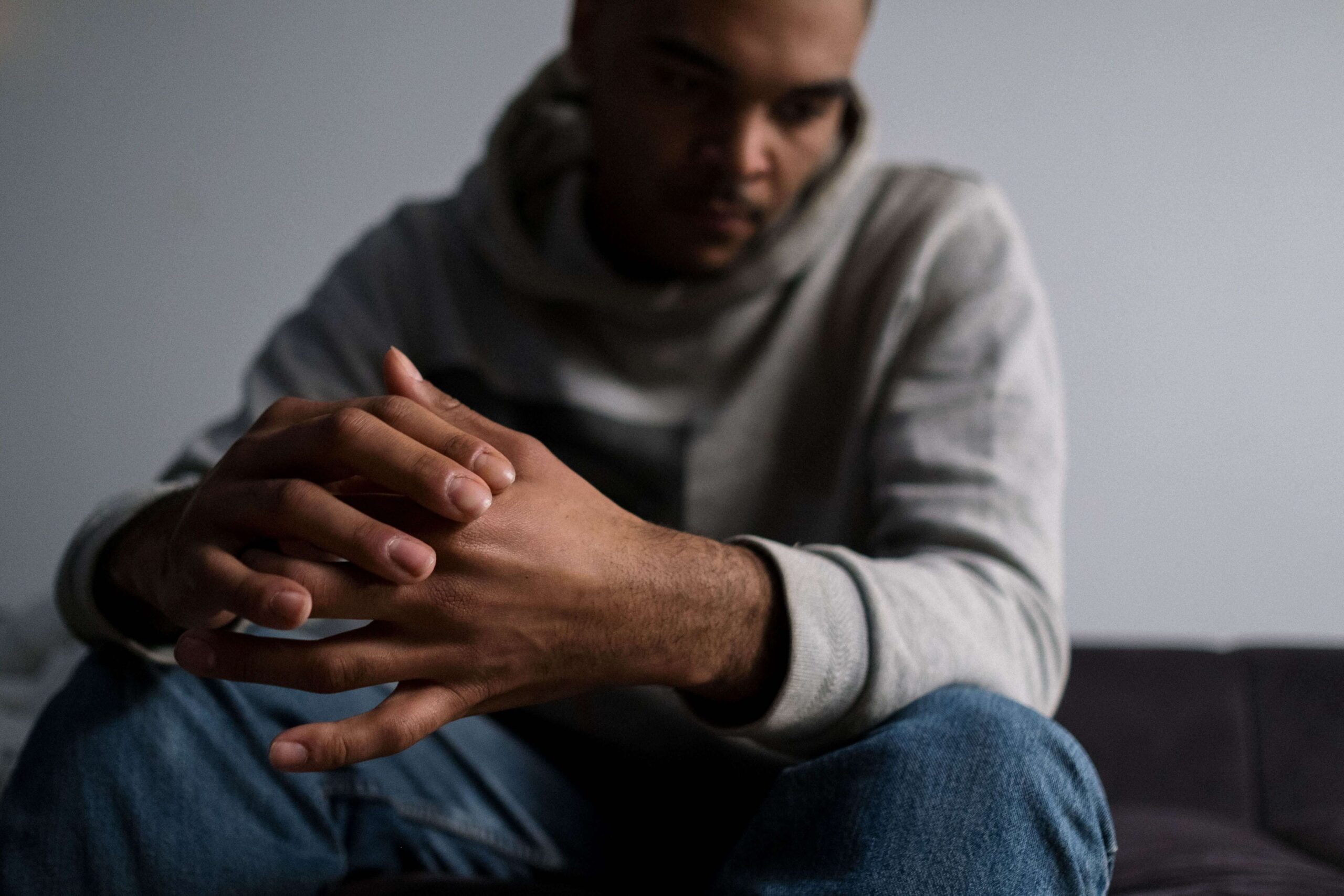
One of the more insidious contributors to relationship anxiety in autistic men is masking — the conscious or unconscious suppression of autistic traits in order to appear neurotypical. Masking might look like forcing eye contact, scripting conversations in advance, carefully monitoring tone and body language, or suppressing sensory reactions that feel socially unacceptable.
In relationships, masking creates a painful paradox. The closer two people become, the more unsustainable the mask becomes. Autistic men may find themselves pulling back at precisely the moments when intimacy is deepening — not because they don’t want closeness, but because closeness feels like an exposure risk. If I let someone really see me, will they still want to stay?
This fear is not irrational. For many autistic men, it is rooted in lived experience. It is also one of the most common themes that emerges in therapy with autistic adults navigating relationships. Therapy can be a place to begin untangling that history from the present — to grieve the relationships where the mask wasn’t enough, and to practice something different.
What Individual Relationship Counseling in Denver, CO Offers
Individual counseling — rather than jumping straight to couples work — is often the most effective starting point for autistic men navigating relationship anxiety. Working one-on-one with a therapist allows space for self-exploration without the pressure of relational performance. There is no partner to manage, no dynamic to navigate. Just you, your history, and a trained professional who can help you make sense of both.
In individual relationship counseling, tailored therapy will help you identify where relationship anxiety is coming from — whether attachment wounds, cumulative rejection, masking fatigue, or sensory and emotional dysregulation. You might explore what emotional safety means to you specifically, and what conditions allow you to feel secure with another person. You may work on developing language for your internal experience — a skill that doesn’t come automatically for everyone and that makes a real difference in intimate communication.
Working with an individual relationship counselor can also be a space to examine the stories you’ve built about yourself as a partner. Many autistic men carry a quiet, painful belief that they are fundamentally harder to love. Therapy offers the opportunity to test that belief against evidence — and, over time, to replace it with something more accurate and more kind.
Confidence in relationships doesn’t mean becoming smooth, effortlessly social, or neurotypical. It means developing enough self-knowledge and self-trust that you can show up authentically. And handle the discomfort that sometimes comes with that.
It means knowing what you need and being able to ask for it. Additionally, it means understanding your own patterns well enough to recognize when anxiety is speaking versus intuition. It means having enough internal stability to stay present in a relationship even when uncertainty arises.
That kind of confidence is built — gradually, in safe spaces, with the right support.
You Deserve Relationships That Work for You

Autistic men are capable of rich, deeply connected, lasting relationships. The path there may require some support. But the destination is real, and it’s worth pursuing.
Individual relationship counseling for autistic men at Empathic Counseling & Psychotherapy can be a meaningful step. If you’re an autistic man in Denver navigating relationship anxiety, working with a therapist who understands neurodivergent experiences can make all the difference.
Begin Individual Relationship Therapy for Autistic Men in Denver, CO
Relationship anxiety can make dating and connection feel overwhelming, especially when you’re unsure how to navigate communication, expectations, or fear of rejection. Individual therapy offers a supportive space to better understand these challenges and build confidence in your relationships.
At Empathic Counseling & Psychotherapy, you can:
- Schedule a consultation to discuss your relationship concerns and goals.
- Explore individual relationship therapy for autistic men in Denver, CO, to better understand relationship anxiety, communication patterns, and self-confidence.
- Develop practical tools for dating, emotional connection, boundary-setting, and navigating relationships more comfortably.
With the support of an experienced individual relationship therapist, you can gain greater confidence, clarity, and security in your relationships.
Additional Mental Health Services for Individuals in Denver
In addition to providing individual relationship therapy, Empathic Counseling & Psychotherapy works with clients navigating a variety of mental health and life challenges. Areas of focus include anxiety, self-esteem concerns, identity development, and support for neurodivergent individuals, including those with autism spectrum disorder.
The practice also offers trauma-focused treatment. This includes EMDR therapy for those seeking to process difficult past experiences and their lasting effects. Services are available for individuals struggling with substance use as well. Therapy is personalized to each client’s needs, drawing from evidence-based approaches that promote insight, resilience, and meaningful personal growth.